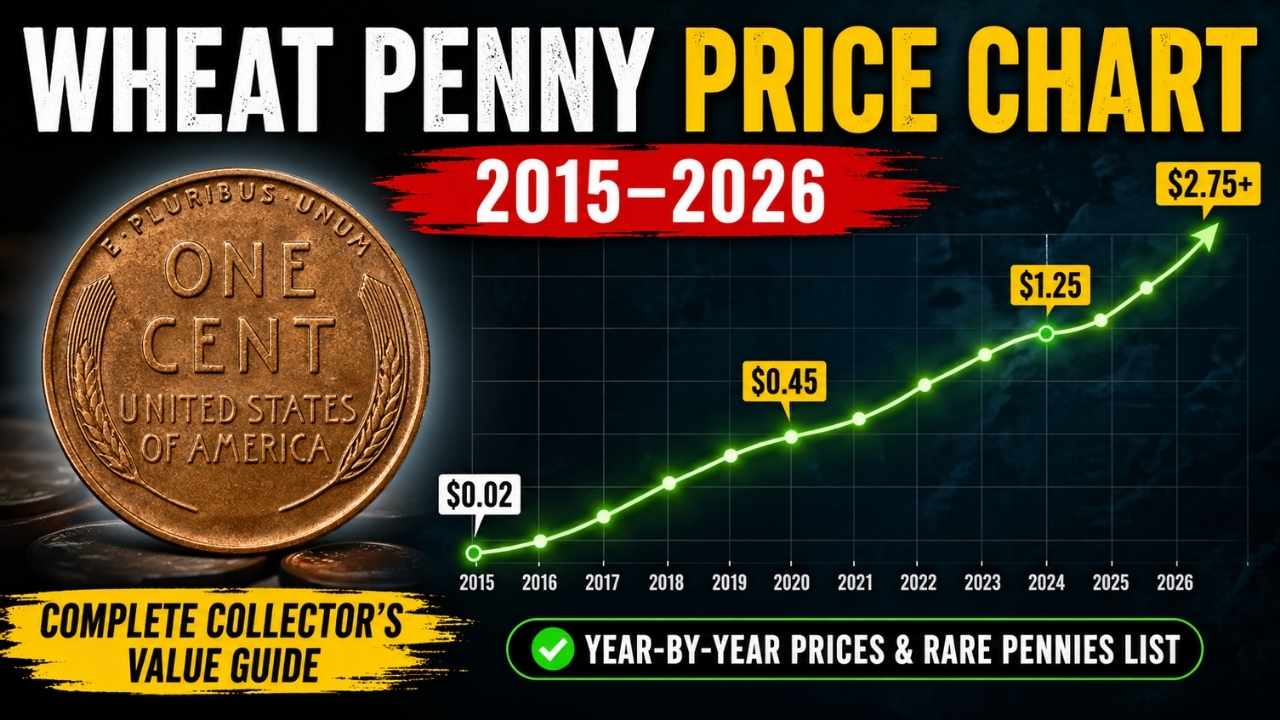
Wheat Penny Price Chart 2015–2026: Wheat pennies, officially known as Lincoln Wheat cents, have fascinated collectors for over a century. Struck from 1909 to 1958, these coins feature Abraham Lincoln on the obverse and two stalks of wheat on the reverse. Over the years, Wheat pennies have become highly collectible due to their historical significance, low mintage years, and occasional minting errors. For modern collectors, understanding the value of Wheat pennies is essential for making informed purchases or sales. This guide provides a comprehensive look at Wheat penny prices from 2015 to 2026 and offers insight into factors that influence their value.
History of the Wheat Penny
The Lincoln Wheat penny was first issued in 1909 to celebrate Abraham Lincoln’s 100th birthday. The design by Victor David Brenner was the first U.S. coin to feature a president’s portrait. Initially, pennies were made from 95% copper and 5% tin and zinc, a composition that remained until 1943 when steel pennies were temporarily introduced due to World War II copper shortages. The wheat ears on the reverse symbolized prosperity and growth, making these coins not only a form of currency but also a reflection of American values. Collectors prize these coins for their historical importance, artistic design, and, in some cases, rarity.

Key Wheat Penny Types
Wheat pennies can be divided into several types based on their design, year of issue, and minting characteristics:
Early Wheat Pennies: Produced from 1909 to 1919, these coins often have higher value, especially rare dates like the 1909-S VDB.

1920s and 1930s Wheat Pennies: These coins are generally more common but include key dates such as the 1922 No D variety and 1931-S, which are sought after by collectors.
1940s Wheat Pennies: Some of these coins were minted during wartime, including 1943 steel cents, which are a unique type of Wheat penny due to their composition.

1950s Wheat Pennies: The final years of Wheat pennies, particularly the 1955 double die, remain popular among collectors.
Mint Marks: Philadelphia (no mint mark), Denver (D), and San Francisco (S) mint marks indicate the production facility, and coins from certain mints are more valuable than others.
Factors Affecting Wheat Penny Value
Several factors determine the value of Wheat pennies in 2026. Understanding these factors helps collectors and sellers accurately assess their coins:
Condition and Grade: Coins are graded from Poor to Mint State. Higher-grade, uncirculated pennies are far more valuable than circulated ones with wear and damage.
Rarity: Low mintage years or coins with minting errors are particularly valuable. Examples include the 1909-S VDB and 1943 copper pennies.
Mint Mark: Coins from the San Francisco or Denver mints are often more desirable than Philadelphia issues, depending on the year.

Composition: Early copper pennies generally hold more value due to their material content. Steel pennies from 1943 are notable for collectors but are less valuable in monetary terms unless they are error coins.
Historical Significance: Coins associated with major historical events or transitional periods, such as wartime steel cents or the last Wheat pennies, attract higher interest.
Wheat Penny Price Trends 2015–2026
Wheat penny values have generally increased over the past decade due to rising interest in numismatics and the finite supply of coins in good condition. From 2015 to 2026, collectors have seen a steady rise in prices, especially for key dates and uncirculated coins. Common circulated pennies from the 1920s through the 1950s typically sell for a few cents to a few dollars, while rare dates or high-grade coins can command hundreds or even thousands of dollars. The market for Wheat pennies is influenced by coin shows, online auctions, and dealer availability, all of which contribute to fluctuations in value.
Notable Wheat Penny Varieties
Collectors should be aware of several notable Wheat penny varieties that often carry higher value:

1909-S VDB: One of the most famous and valuable Wheat pennies, especially in uncirculated condition.
1914-D: A rare Denver-minted penny with high collector demand.

1922 No D: A unique variety from Denver where the mint mark does not appear properly.
1931-S: Low mintage makes this San Francisco issue highly sought after.
1955 Double Die: Famous for its doubled date and lettering, a high-grade example can fetch significant prices.
1943 Copper Penny: Extremely rare, as most pennies that year were made from steel; these are highly prized by collectors.
Tips for Collecting and Selling Wheat Pennies
When collecting Wheat pennies, organization is key. Sorting coins by year, mint mark, and condition allows collectors to track rarities and maintain a coherent collection. Using protective holders and albums helps preserve the value of high-grade coins.
Selling Wheat pennies requires understanding current market trends and consulting reputable dealers or online marketplaces. Coins in higher grades, rare varieties, or those with historical significance will generally yield the best prices. Proof sets and uncirculated coins are particularly valuable and can be sold at premium rates.
Conclusion
Wheat pennies are a remarkable part of American numismatic history. Their design, historical context, and occasional rarity make them a rewarding collection for enthusiasts. From common pennies worth face value to rare examples commanding hundreds or thousands of dollars, understanding the factors that influence value is essential for any collector. By keeping an eye on trends, studying mint marks and dates, and preserving coins in good condition, collectors can enjoy a hobby that combines history, artistry, and investment potential. Whether you are a beginner or an experienced collector, Wheat pennies remain a timeless and valuable part of any collection.