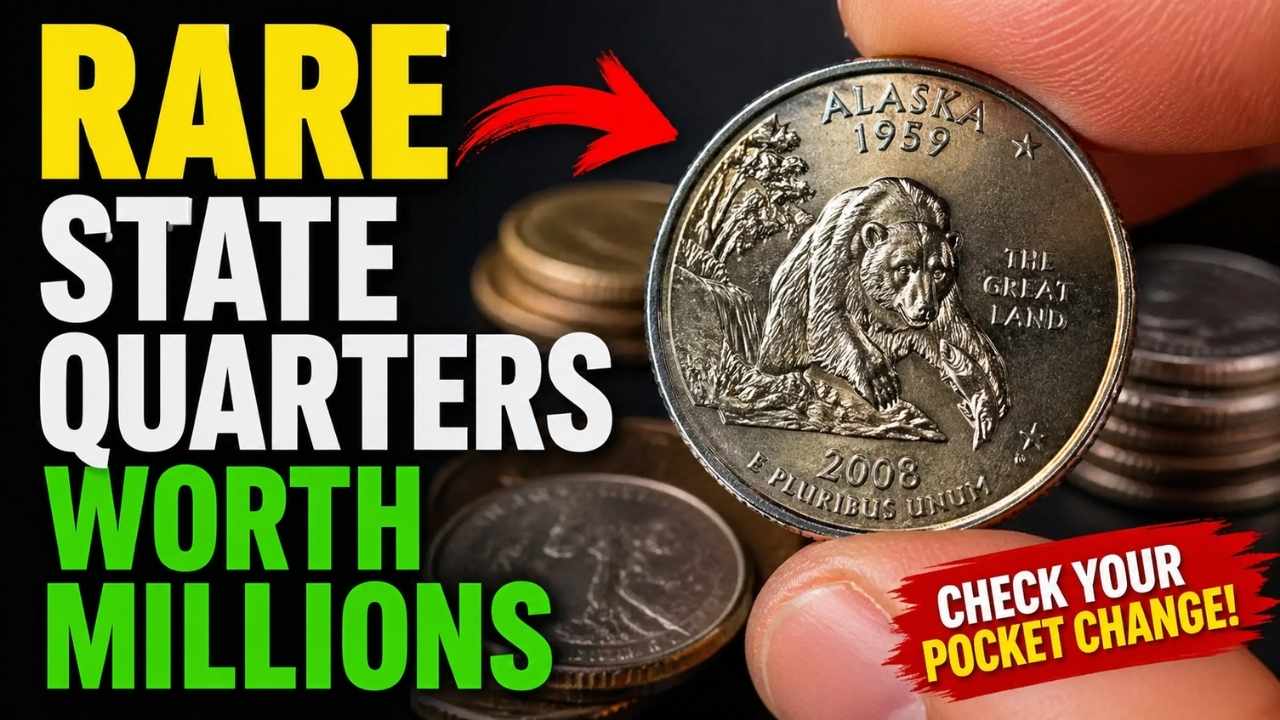
Rare State Quarters Worth Millions: State quarters are among the most popular and widely collected series in modern U.S. coinage. Issued from 1999 to 2008, the 50 State Quarters Program commemorated each state with unique designs representing its history, culture, and landmarks. While most state quarters are common and primarily worth their face value, some rare examples, errors, or limited releases have become highly valuable, even reaching million-dollar status for collectors. This guide explores the rarest state quarters, the factors that influence their value, and the fascinating history behind these coins.
History of the State Quarters Program
The 50 State Quarters Program was launched by the United States Mint to celebrate the country’s states and encourage coin collecting. Each quarter featured a unique reverse design, often depicting iconic symbols, historical figures, or landmarks. Over ten years, the program issued quarters in the order of statehood, starting with Delaware in 1999 and ending with Hawaii in 2008. The program was widely popular, circulating billions of coins and sparking a new era of coin collecting for both casual and serious enthusiasts. Many people saved these coins without realizing that some varieties could be worth far more than their face value.

Types of Rare State Quarters
Rare state quarters can generally be divided into several types:
Mint Errors: Coins with mistakes, such as double dies, off-center strikes, missing letters, or extra design features, are highly collectible. Errors are often discovered by careful examination or magnification.
Low-Mintage Quarters: Certain quarters had relatively fewer coins struck or distributed in specific years or at specific mints. These coins tend to be more valuable to collectors.
Special Proof Coins: Proof coins were specially made for collectors with a mirror-like finish. Proof quarters from San Francisco often have limited production and can command higher prices.

Unique Design Variations: Some state quarters were struck with subtle variations in design or metal composition, making them sought after in collector circles.
Notable Rare State Quarters
Several state quarters stand out due to rarity, mint errors, or historical significance:
Delaware 1999: The first quarter in the series is valuable in uncirculated or proof condition, especially with die errors.
North Carolina 2001-P: Rare minting errors, such as doubled dates or missing elements, make certain coins valuable.
Mississippi 2002-P: Low-mintage proof coins and circulation errors attract collector interest.
Alabama 2003-D: Notable for misstruck or off-center errors that can command high prices.
Hawaii 2008-P: The final quarter in the series, especially in pristine uncirculated or proof condition, is highly collectible.
Other notable errors include double dies, missing mint marks, or misaligned designs that were only struck in small numbers before detection by the U.S. Mint.

Factors Affecting State Quarter Value
Several factors determine the value of rare state quarters:
Condition and Grade: Coins are graded from Poor to Mint State. Higher-grade, uncirculated coins and proof coins are far more valuable than worn examples.

Mint Mark: Coins minted in San Francisco (S) or Denver (D) with low production numbers are often worth more than Philadelphia (P) coins.
Error Type: Some errors are more valuable than others. For example, double die errors or coins missing key design elements can be extremely rare.

Rarity: Coins struck in small quantities or with limited distribution are naturally more valuable.
Historical Significance: Coins associated with the first or last releases, or those with unique designs representing critical moments in a state’s history, tend to attract collector interest.
How to Identify Rare Quarters
Identifying rare state quarters requires careful observation. Collectors should check for:
Doubling on Dates or Letters: Double die errors are easily spotted with a magnifying glass or microscope.
Misaligned Strikes: Coins that are off-center or have rotated dies are highly collectible.
Missing Elements: Quarters missing mint marks, letters, or part of the design can fetch high prices.
Metal Variations: Rare composition errors, such as unusual coloration or planchet defects, can increase value.
Documentation: Certified coins by professional grading services are easier to sell and often fetch premium prices.
Tips for Collecting and Selling
Collectors should organize state quarters by year, mint mark, and condition. Protective holders or albums help preserve value and prevent damage. Regularly checking pocket change, old coin rolls, or estate collections can lead to unexpected finds.
Selling rare quarters is best done through reputable dealers, coin shows, or online auction platforms. Professional grading enhances credibility and maximizes potential sale price. Researching recent auction results and consulting price guides helps set realistic expectations for both buyers and sellers.
Conclusion
State quarters are more than everyday currency; they are miniature pieces of American history that tell the story of each state’s heritage. While most quarters remain worth only their face value, rare errors, low-mintage issues, and proof coins can reach impressive values, sometimes even in the millions. Understanding what makes a state quarter rare, paying attention to condition and mint marks, and carefully examining coins for errors are key steps for collectors. With diligence and patience, collectors may uncover valuable coins in circulation, collections, or hidden stashes, transforming ordinary quarters into extraordinary treasures. State quarters remain a captivating area of collecting, offering both historical significance and the potential for significant financial reward.