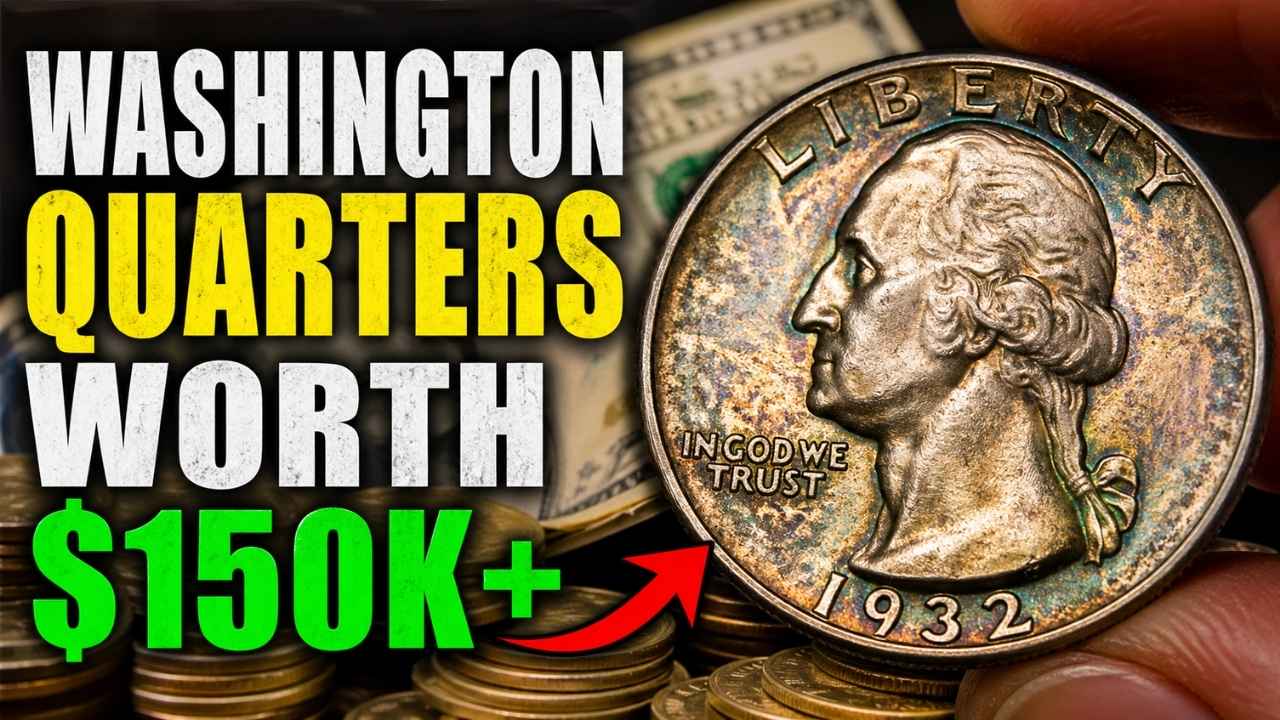
Washington Quarters Worth $150K: Washington quarters are among the most common coins in U.S. circulation, first issued in 1932 to commemorate the 200th anniversary of George Washington’s birth. For decades, these quarters have been exchanged in everyday transactions, making them a familiar sight in pockets, coin jars, and cash registers. Despite their common appearance, some Washington quarters are extremely rare and can be worth $150,000 or more. These coins often look ordinary at first glance, making them a hidden treasure for collectors who know what to look for.
History of the Washington Quarter
The Washington quarter was introduced in 1932, replacing the Standing Liberty quarter. Designed by John Flanagan, the obverse features a profile of George Washington, while the reverse initially displayed an eagle with outstretched wings. The coin was originally composed of 90% silver until 1964, after which it transitioned to a copper-nickel clad composition. Over the decades, various minting errors, low-mintage years, and unique varieties have created opportunities for collectors to discover highly valuable coins.

Key Types of Valuable Washington Quarters
Washington quarters can be divided into several types, each with unique characteristics that influence collector value:
Silver Quarters: Coins minted from 1932 to 1964 are made of 90% silver, giving them intrinsic metal value as well as collectible appeal.
Copper-Nickel Quarters: Beginning in 1965, coins were made primarily from copper and nickel. While common in circulation, some low-mintage or error coins can be highly valuable.
Proof Coins: Specially struck coins with a mirror-like finish, often included in collector sets. These coins are particularly sought after in high grades.
Mint Errors: Coins with double dies, off-center strikes, missing letters, or other minting mistakes are considered rare and can command substantial prices.
Rare Washington Quarters Worth $150K+
While many Washington quarters are worth only face value, several coins have become highly collectible due to rarity, minting errors, or historical significance. Examples include:
1932-D Quarter: The Denver-minted 1932 quarter is one of the most valuable Washington quarters. Only about 436,800 were struck, making it extremely rare. High-grade coins have sold for six-figure sums.
1932-S Quarter: The San Francisco-minted 1932 quarter is also highly sought after, with low mintage and strong collector demand. Well-preserved examples can reach substantial prices.

1950-D/S Over Mint Mark Error: This rare minting error involves coins struck with overlapping Denver and San Francisco mint marks. These errors are extremely limited and command high collector interest.
1943 Steel Quarter Error: While most 1943 coins are copper-nickel, a few steel planchets were accidentally struck, creating rare error coins.
1964 Doubled Die Obverse: Some 1964 quarters feature doubling of the date and lettering, a subtle but valuable error for collectors.
Factors Affecting Washington Quarter Value
Several factors determine the value of Washington quarters:

Condition and Grade: Coins are graded from Poor to Mint State. High-grade uncirculated coins are generally worth far more than worn circulation examples.
Rarity: Low-mintage coins, mint errors, or limited proof issues are more valuable.

Mint Mark: Coins from certain mints, like Denver (D) or San Francisco (S), can be more valuable, especially when mintage numbers are low.
Historical Significance: First-year issues, unusual compositions, or coins linked to significant events can increase collector interest.
Market Demand: Rare coins can see fluctuating prices depending on collector interest and auction trends.
How to Spot High-Value Washington Quarters
Identifying valuable Washington quarters requires careful examination. Collectors should:
Check Mint Marks: Look for D or S mint marks, especially on early dates. Coins without a mint mark are from Philadelphia.
Inspect for Errors: Use a magnifying glass to detect doubled dies, missing letters, or off-center strikes.
Evaluate Condition: Coins with minimal wear, strong luster, and no scratches or damage are more valuable.
Seek Expert Opinions: For high-value coins, professional grading can confirm authenticity and grade, significantly increasing market value.
Tips for Collecting and Selling
When collecting Washington quarters, organizing coins by year, mint mark, and condition is essential. Using protective holders or albums preserves coins and maintains value. Searching through circulation, old collections, and estate sales can uncover valuable finds.
Selling rare coins is best done through reputable dealers, coin shows, or professional auction houses. Graded coins often sell for higher prices, and collectors are willing to pay premiums for verified rare examples. Researching recent sales and market trends ensures realistic pricing.
Conclusion
Washington quarters are not just ordinary coins; they are potential treasures hiding in plain sight. While most quarters remain worth only their face value, rare issues, low-mintage coins, and minting errors can fetch six-figure prices. From the 1932-D and 1932-S to subtle doubled dies and mint mark errors, collectors have a wide range of opportunities to discover valuable coins. Understanding rarity, condition, and minting details allows collectors to identify these hidden gems and potentially uncover coins worth $150,000 or more. Washington quarters combine historical significance, artistry, and financial potential, making them a fascinating and rewarding area of coin collecting.