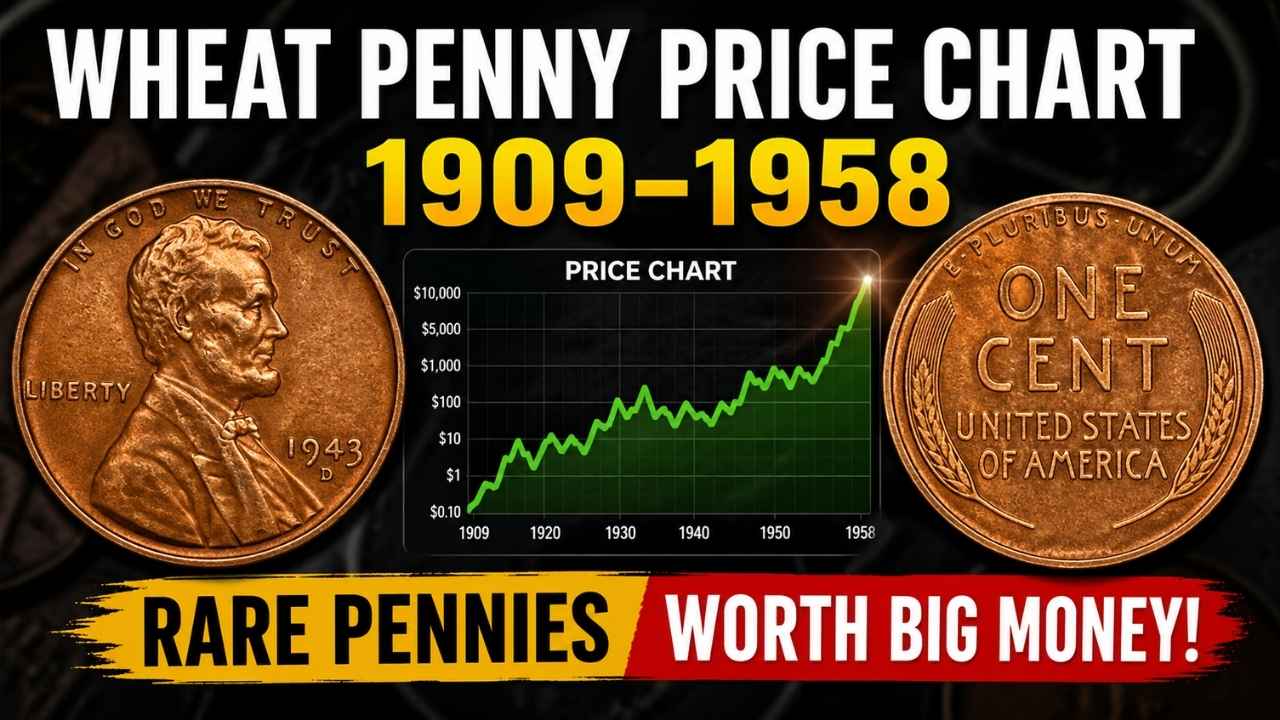
Wheat Penny Price Chart 1909–1958: Wheat pennies, officially known as Lincoln cents, are one of the most popular and collectible coins in American numismatics. Minted from 1909 to 1958, these coins feature the portrait of President Abraham Lincoln on the obverse and two stalks of wheat on the reverse. The design commemorates the centennial of Lincoln’s birth and symbolizes prosperity and growth.
Collecting wheat pennies is both a historical exploration and a financial investment. Each coin’s value depends on factors such as rarity, mint year, mint mark, and condition. Understanding these aspects is essential for both novice and experienced collectors looking to build or appraise a collection.

Overview of the 1909 Lincoln Cent
The first Lincoln cent was minted in 1909, marking a significant change in U.S. coinage by featuring a real person for the first time. The original designer, Victor David Brenner, created the iconic portrait and wheat reverse design.
1909 coins are especially notable because they include two distinct varieties: the standard 1909 and the 1909-S VDB, which refers to coins minted in San Francisco with the designer’s initials on the reverse. The 1909-S VDB is particularly rare and highly sought after by collectors.

Key Factors Affecting Wheat Penny Value
Several factors determine the value of wheat pennies, and collectors must consider all of them when assessing a coin:
Condition or grade is critical. Coins are graded from Poor (P-1) to Mint State (MS-70), with higher grades commanding premium prices.

Rarity is another important factor. Some years and mint marks had lower production numbers, making them harder to find.
Historical significance can also influence value. Coins from certain years or those with unique design features are more desirable.
Mint marks indicate the mint location and include D for Denver, S for San Francisco, and no mark for Philadelphia. Some mint marks are rarer than others for specific years.
Wheat Penny Price Trends: 1909–1919
The earliest wheat pennies, from 1909 to 1919, show a wide range of values due to their age and historical significance. Key highlights include:
1909-S VDB is extremely rare, especially in higher grades, and can fetch thousands of dollars.
1909-S coins without the VDB initials are more common but still valuable in good condition.
1914-D is another notable key date with a limited mintage, making it highly prized among collectors.
During this period, prices generally increase significantly for coins in uncirculated condition, reflecting their rarity and historical interest.

Wheat Penny Price Trends: 1920–1939
The 1920s and 1930s saw larger mintages, but some coins from this period are still valuable due to scarcity or condition. Noteworthy points include:
1922 plain (no D mint mark) cents are rare because most coins in 1922 were minted in Denver.
1923-S and 1931-S coins are considered key dates in the San Francisco mint series.
Depression-era coins often show circulation wear, so finding high-grade specimens can be challenging and rewarding.

Prices for this era fluctuate based on grade, with uncirculated coins commanding significantly higher values than those showing wear.
Wheat Penny Price Trends: 1940–1958
Coins from 1940 to 1958 are more common but still offer collectible value, especially in uncirculated condition. Key notes for this period include:

1943 steel cents were produced due to wartime copper shortages, and high-grade specimens are highly collectible.
1944 and 1945 cents returned to copper and remain popular among collectors.
Late 1950s pennies, such as 1955 and 1958, are easier to find but may still command premium prices if in exceptional condition or uncirculated.
During this period, the price difference between circulated and mint condition coins is substantial, highlighting the importance of coin preservation.

How to Assess Wheat Penny Value
Accurately assessing wheat penny value involves examining several factors:
Inspect the coin’s condition carefully, looking for wear, scratches, or damage.
Check for mint marks and verify the year, as certain combinations are significantly rarer.
Consider professional grading for high-value coins, as certified coins often fetch higher prices on the market.
Compare current market prices using collector guides, auction results, and reputable dealers.
Understanding these factors helps collectors make informed decisions when buying, selling, or trading wheat pennies.
Storing and Preserving Wheat Pennies
Proper storage is essential to maintain the value of wheat pennies. Coins should be kept in a cool, dry environment to prevent corrosion or tarnishing.
Use acid-free holders, flips, or coin albums designed for long-term preservation. Avoid handling coins with bare hands, as oils from the skin can damage the surface. Gloves or tongs are recommended for valuable specimens. Regular inspection ensures early detection of any potential issues like moisture damage or discoloration.
Tips for Collecting Wheat Pennies
Start by focusing on a specific year range, mint mark, or type of coin to make your collection manageable.
Join collector groups or online forums to learn from experienced enthusiasts.
Purchase coins from reputable dealers or certified auctions to ensure authenticity.
Keep detailed records of your coins, including purchase information, condition, and any certification details.
Gradually build your collection, balancing key dates, rare coins, and more common examples to create a comprehensive and enjoyable assortment.
Conclusion
Wheat pennies offer both historical significance and collectible value, making them an enduring favorite for coin enthusiasts. From the 1909 VDB coins to the more common late 1950s pennies, understanding mint years, mint marks, condition, and market trends is essential for successful collecting.
By carefully assessing value, storing coins properly, and building a focused collection, collectors can enjoy both the aesthetic and financial rewards of wheat penny collecting. These small coins carry a rich history and provide a tangible connection to America’s past, ensuring their appeal will continue for generations of collectors.
Wheat pennies are not just coins—they are pieces of history that tell the story of a nation, its economy, and its culture, all while offering an exciting and potentially rewarding hobby for those who take the time to learn and appreciate them.