Rare U.S. Coins Worth More Than Gold: Collecting rare U.S. coins has long been a pursuit that combines history, artistry, and investment potential. In 2026, certain coins have gained significant attention for their value, surpassing even the price of gold. These coins are prized not only for their metal content but also for their rarity, historical significance, and condition. Collectors around the world seek these treasures, knowing that owning one is like holding a piece of American history in their hands.
In this guide, we explore the top five rare U.S. coins that are currently worth more than gold, detailing why they are so coveted, what makes them unique, and why collectors are willing to pay a premium to acquire them. These coins represent the pinnacle of numismatic excellence, blending historical significance with investment potential.

1. 1933 Saint-Gaudens Double Eagle
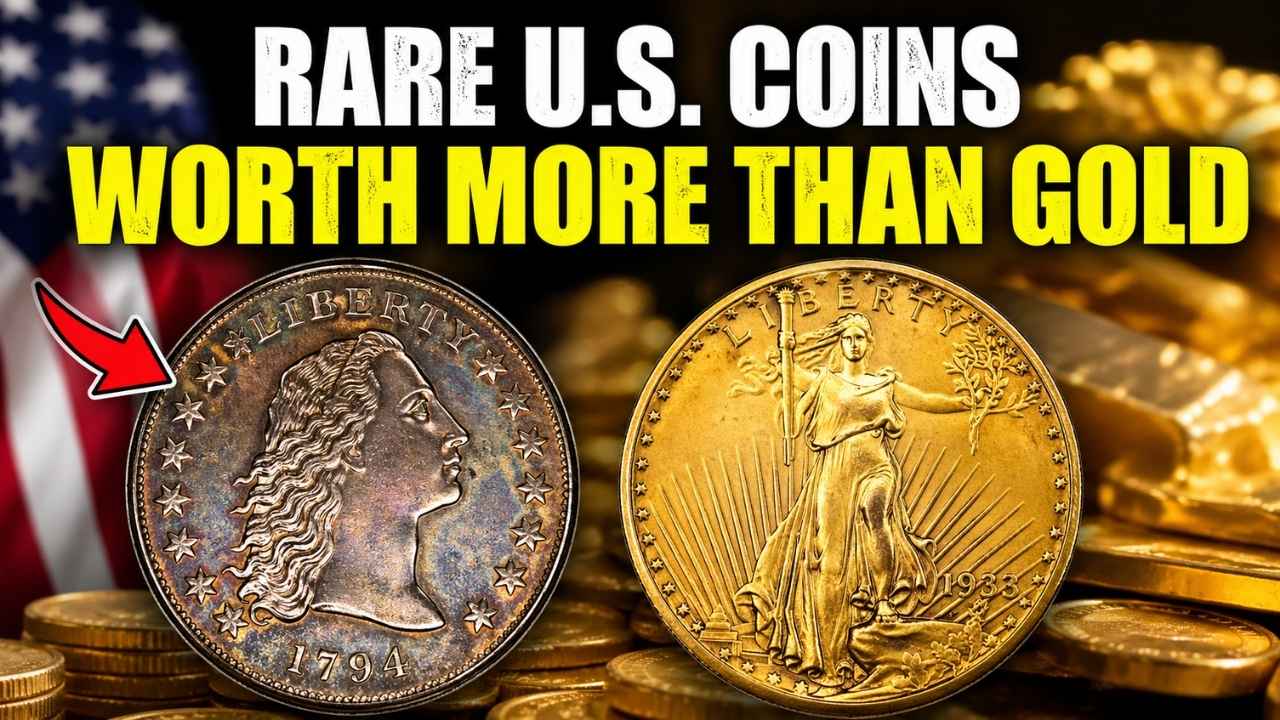
The 1933 Saint-Gaudens Double Eagle is perhaps the most famous rare U.S. coin. While millions were minted, none were officially released into circulation due to the gold recall during the Great Depression. Only a handful of these coins exist legally, making them extraordinarily valuable.
This coin is celebrated for its exquisite design by Augustus Saint-Gaudens, featuring Lady Liberty striding forward on the obverse and a majestic eagle in flight on the reverse. Its historical context, combined with extreme rarity, has led to auction prices surpassing $20 million in recent years. Collectors prize the 1933 Double Eagle not just for its gold content but for its story, artistry, and symbolic value.

2. 1913 Liberty Head Nickel
The 1913 Liberty Head Nickel is another legendary piece of U.S. numismatics. Only five specimens are known to exist, making it one of the rarest coins in American history. Its creation was never officially sanctioned, which adds a layer of intrigue and mystique to the coin.
Each of the five nickels has its own unique provenance, with some having appeared in prominent museum collections and private auctions. The obverse features the classic Liberty Head design, while the reverse showcases the coin’s value denomination and intricate details. In 2026, these nickels are valued at several million dollars, far exceeding the market price of gold, and they remain a centerpiece for serious collectors.

3. 1794 Flowing Hair Silver Dollar
The 1794 Flowing Hair Silver Dollar is widely regarded as the first silver dollar minted by the United States. Its historical significance is unmatched, representing the birth of American coinage. Only a limited number of these coins survive, with many preserved in exceptional condition, making them extremely rare and valuable.
Collectors admire the Flowing Hair design, which depicts Lady Liberty with flowing hair on the obverse and a simple, elegant eagle on the reverse. This coin’s combination of historical importance, age, and rarity has led to auction prices reaching millions of dollars, solidifying its status as a must-have for serious numismatists.

4. 1804 Silver Dollar, Class I
The 1804 Silver Dollar is famously known as the “King of American Coins.” Despite its 1804 date, most existing examples were actually minted in the 1830s for diplomatic gifts, making them historically fascinating. Only a few dozen of these coins exist today, and they are divided into classes, with Class I being the most prized.
The 1804 Silver Dollar is renowned for its rarity, beauty, and historical significance. Collectors value it not only as a piece of currency but as a symbol of American craftsmanship and diplomacy. In 2026, Class I specimens have fetched prices exceeding $4 million, making them far more valuable than gold bullion and highly coveted by investors and collectors alike.

5. 1915-S Panama-Pacific Exposition Half Eagle
The 1915-S Panama-Pacific Exposition Half Eagle is a commemorative coin issued to celebrate the completion of the Panama Canal and the San Francisco exposition. Struck in extremely limited quantities, it has become one of the most sought-after commemorative coins in U.S. history.
The coin features intricate designs on both sides, with a radiant depiction of Liberty and symbolic imagery representing progress and industry. Its rarity, historical context, and intricate artistry have elevated its value well beyond the intrinsic value of its gold content. In 2026, collectors are willing to pay over a million dollars for this unique piece, recognizing it as a tangible link to a pivotal moment in American history.

Why These Coins Are Worth More Than Gold
These rare coins are worth more than gold not simply because of their precious metal content but because of their historical, artistic, and collectible value. Rarity plays a key role, as a limited number of surviving specimens ensures high demand among collectors. Additionally, provenance, condition, and historical significance greatly influence their market value.
Unlike gold bullion, which has a standard market price, rare coins carry unique stories and aesthetics that appeal to collectors and investors. They are tangible artifacts that connect the owner to American history, making them emotionally and financially valuable. In 2026, the combination of scarcity, condition, and historical relevance has driven prices to levels far exceeding the spot price of gold.

How to Acquire These Rare Coins
Acquiring these coins requires careful planning and expert knowledge. Auctions, reputable dealers, and private sales are the primary avenues for collectors seeking these treasures. Authentication and certification are critical, as counterfeit coins are a persistent issue in the rare coin market. Organizations like the Professional Coin Grading Service (PCGS) and Numismatic Guaranty Corporation (NGC) provide verification and grading, ensuring authenticity and condition.
Collectors should also consider provenance and historical documentation when purchasing rare coins. Detailed records enhance the coin’s value and assure potential buyers of its legitimacy. Patience and research are essential, as these coins do not appear frequently on the market, and competition can be intense.

Investing in Rare Coins
Rare coins are not only collectibles but also investment assets. Unlike gold, which fluctuates based on commodity markets, rare coins derive value from scarcity, historical importance, and collector demand. A well-chosen coin can appreciate significantly over time, offering both financial growth and enjoyment as a collectible.
Investing in rare coins requires careful consideration of market trends, historical sales, and the coin’s condition and rarity. Diversifying within a collection and acquiring coins with established provenance can enhance investment potential. In 2026, coins like the 1933 Double Eagle or 1913 Liberty Head Nickel continue to demonstrate strong appreciation, underscoring the value of these exceptional artifacts.

Conclusion
The rare U.S. coins highlighted in 2026—such as the 1933 Saint-Gaudens Double Eagle, 1913 Liberty Head Nickel, 1794 Flowing Hair Silver Dollar, 1804 Silver Dollar, and 1915-S Panama-Pacific Exposition Half Eagle—exemplify the perfect blend of history, artistry, and investment potential. These coins are worth far more than gold, not merely for their metal content but for their scarcity, provenance, and cultural significance.
For collectors and investors alike, these treasures offer a unique opportunity to own a piece of American history. They serve as tangible connections to the past, celebrating craftsmanship, ingenuity, and historical milestones. In 2026, the market for rare U.S. coins continues to thrive, reflecting a growing appreciation for numismatic artistry and the enduring allure of these exceptional collectibles.